December 21, 2025
Best LGBTQ films of 2025, part 1: ‘Hedda,’ ‘Pee-Wee’ and ‘Sally’ are among our top picks
Brian Bromberger READ TIME: 2 MIN.
2025 was not a good year for movies in general and LGBTQ films in particular. It was supposed to be different, since this year was the recovery from the 2023 strikes which crippled Hollywood for six months. Instead, films that got generally good reviews and had well-known stars (i.e. “After the Hunt” with Julia Roberts; “Die My Love,” with Jennifer Lawrence) were box office flops. According to the New York Times, during October, ticket sales in the U.S./Canada totaled $445 million while in October 2019, adjusted for inflation, it was $1 billion.
What has become apparent in the last five years but was more or less solidified this year is that movies that are spectacles, events, or have lots of special effects are the ones most likely to succeed financially. Franchise sequel films and horror movies also attract sizable viewer crowds.
Audiences seem to bypass films they feel they can stream at home. Movies are expensive, especially if you add the cost of concession food and drinks, so it’s cheaper to stream a paid movie that several people can watch at home and provide your own treats.
The only two potential Oscar-nominated films that have made a profit are Paul Thomas Anderson’s “One Battle After Another,” an action comic thriller about a far-left revolutionary group, and “Sinners,” a horror film with two criminal brothers who return to their hometown and are confronted with vampires, both event-type movies. Because they are often smaller and independently made, this is not good news for LGBTQ films, which will be discussed next week. Because this wasn’t a particularly good year for queer movies, it was difficult to assemble a Top 10 list, but here goes.
10. “The Wedding Banquet” (Bleecker Street) is a contemporary update of Ang Lee’s 1993 classic which concerned a gay Taiwanese man who marries a Chinese woman to satisfy his parents (and hide the truth about his gay partner) while she can get a green card to stay in the country.
In the remake by Andrew Ahn (“Fire Island”), there are two queer couples, gays (including Bowen Yang) and lesbians (including Lily Gladstone). When Min’s overbearing grandmother wants him to return to Korea to take over the family business, and the lesbians’ IVF attempt to have a baby fails but they need money to try again, an idea is hatched for Min to marry Angela so he can stay in the U.S. and then give the lesbians the money to retry IVF.
This film is an accurate portrayal of queer relationship inter-dynamics as opposed to the 1993 original, which focused on homophobia and the shame of being gay. I prefer the 1993 movie because it has a lighthearted charm, while the 2025 version is more earnest. The 1993 characters are more developed and likable than the 2025 remake. Still, I suspect younger audiences will prefer the 2025 update. It’s heartfelt with lots of good will and is occasionally moving. The dequeering of the lesbian’s home is a hoot. The cast is its best asset. This is a well-intentioned effort on the affirmation and complexities of chosen queer families.
9. With the news that the government will cut federal funds for any hospital or clinic that provides gender-affirming care to adolescents, plus the other indignities trans people have suffered in the last 10 months, 2025 might go down as one of the worst in trans history.
The well-timed documentary “Heightened Scrutiny” (Ford Foundation-Just Films) follows ACLU attorney Chase Strangio, the first trans person to argue before the Supreme Court, as he wages a legal battle to overturn Tennessee’s ban on gender-affirming care (puberty blockers and hormone therapy) for transgender care in U.S. vs. Skrmetti.
In June, after the documentary was completed, Skrmetti lost, but Strangio still emerges as a folk trans hero. He’s engaging and dedicated, but also brash, not worrying if he’s liked or not, especially since he had to handle the accompanying stress when so much was at stake in battling for the right to access life-saving healthcare.
But his courageous defiance symbolizes the trans fight to persevere despite the hate and endangerment of lives engendered by the anti-trans legislation in its attempt to eradicate trans existence. Ultimately as this doc makes clear, this is part of a larger conversation around trans rights and bodily autonomy in which Strangio will continue to play a major role.
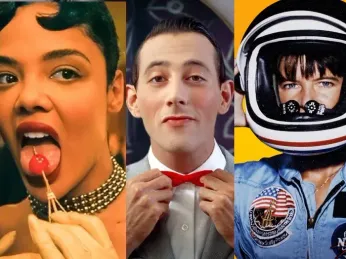
8. “Pee-Wee as Himself” is an HBO documentary on Paul Rubens who died at 70 in 2023, but was interviewed for 40 hours only months prior to his death. The big news is that Rubens officially came out as gay, which isn’t exactly shocking, as he wanted to set the record straight about his sexuality.
But Rubens wrestled with how to come to terms with his famous alter-ego Pee-Wee Herman, a character he developed as a member of the improv troupe The Groundlings. Director Tim Burton’s film “Pee-Wee’s Big Adventure,” then his TV show “Pee-Wee’s Playhouse” on CBS made him a huge success and cultural icon.
However, his arrest in 1991 for indecent exposure in an adult movie theater derailed his career. Rubens stopped cooperating with gay director Matt Wolf, who managed to finish the documentary without Rubens’ assistance. Clearly Rubens was a difficult perfectionist, but this compelling documentary makes a solid case that he was a comic genius.
In a tie for best biographical film is the National Geographic documentary, “Sally,” about feminist icon/heroine Sally Ride, the first woman astronaut in space who flew on the Challenger space shuttle in 1983. The public didn’t find out Ride was a lesbian until after she died of pancreatic cancer in 2012.
The bulk of the film is an interview with Ride’s life partner of 27 years, Tam O’Shaughnessy, and why Sally remained in the closet. Ride comes across as dedicated, no-nonsense, even prickly. Her service on the commission investigating the 1986 Challenger explosion disillusioned her about NASA and she resigned. Still, this conventional but captivating film justly credits Ride with being a trailblazer for women.
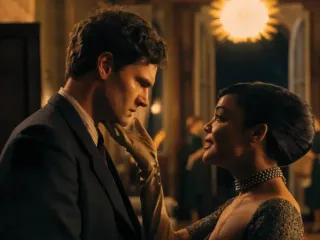
7. A queer power struggle reimaging of Ibsen’s feminist classic play “Hedda Gabler,” which shifts the action from turn-of-the-century Norway to 1950s England countryside in a bold attempt to bond classical and modern elements, works intermittently in Amazon Prime’s "Hedda."
It’s really a commentary on 21st-century sexual mores (including gender swaps) wrapped in the guise of 1950s conformity. Biracial actress Tessa Thompson excels as the unhappy Hedda Tessman just returning from her honeymoon with her ambitious boring academic husband George, whom she married for his money and social position.
She really wants to reconnect with her former female lover Eileen (a luminous Nina Hoss), an academic vying for the same teaching position as George. Eileen has taken a new lover who left her husband, helped her overcome an alcohol addiction and become a writer collaborator for her new manuscript which they hope will secure the professorship she wants.
It becomes a series of deadly mind games, of who can outsmart who and get what they want, a “Dangerous Liasions” motif grafted onto the Ibsen play. It’s a moral treatise on the dangers of frustrated ambition and the depravity that can result when power and control take over love and desire. Intelligent and wildly inventive, you admire the effort more than you love it, but it engages the viewer as we breathlessly follow an ever moving, ever plotting, ever unhappy Hedda, who tries unsuccessfully to find fulfillment, leading to an ambiguous ending.
6. The experimental 16mm film “Peter Hujar’s Day” (Janus Films), directed by the incomparable gay director Ira Sachs and starring the great gay actor Ben Whishaw, concerns an artist reliving his previous day at the behest of a woman friend, nonfiction writer Linda Rosenkrantz, who’s writing a book.
Hujar (1934-1987) was a gay photographer known for his black-and-white portraits (i.e. The Orgasmic Man), lover and mentor to artist David Wojnarowicz. He was a contemporary of the controversial gay photographer Robert Mapplethorpe who overshadowed him. Hujar later died of AIDS.
Based on rediscovered tapes of this interview, this is a reflection on the struggles of being a gay creative artist in post-Stonewall New York in the early 1970s. It features an amusing incident with Hujar taking a bad photo of difficult gay Beat poet Allen Ginsberg. To some it will appear nothing of consequence is going on in this film, but it’s Hujar reassessing his life and what he wants to accomplish. For him, daily life and creativity bleed into each other. This film won’t appeal to everyone, but it’s a stirring portrait of a New York long gone with deep sometimes mesmerizing observations about art, friendship, sexuality, and the costs of being gay during the early years of liberation.
(Read about Brian’s top five films in next week’s issue.)