Dec 8
Grindr Unwrapped 2025: What 135 Billion Chats Reveal About Global Queer Culture
READ TIME: 6 MIN.
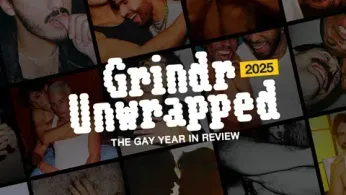
When Grindr released its fifth annual “Grindr Unwrapped” report for 2025, the company framed it as more than a year‑in‑review for a hookup app; it positioned the data as a snapshot of how queer people around the world engaged with one another and influenced broader culture over the past 12 months. The 2025 edition of the report, which analyzes patterns from more than 135 billion chats exchanged on the platform, underscores the scale at which LGBTQ+ people are using digital tools to build community, explore identity, and participate in global pop‑culture conversations.
According to coverage by Gayety , Grindr Unwrapped relies on data from over 15 million monthly active users and a user poll that gathered 32,000 votes, tripling participation compared with the previous year’s report. By combining anonymized engagement metrics with user‑driven rankings of favorite artists, public figures, and viral moments, the project aims to show not only what queer users consumed in 2025, but also how they helped define what counted as “viral” in the first place.
In an interview cited in the Gayety article, Tristan Pineiro, Grindr’s Senior Vice President of Marketing and Communications, described the initiative as an annual “receipt check” on queer culture, arguing that “the internet moves fast, but the gay internet moves faster,” and that the trends surfacing among Grindr users frequently migrate into mainstream media shortly afterward. That framing echoes broader media analysis of LGBTQ+ influence in digital culture, where queer memes, slang, and aesthetics regularly originate in online subcultures before being adopted by wider audiences.
One of the most attention‑grabbing parts of Grindr Unwrapped 2025 is its roster of tongue‑in‑cheek “of the Year” titles, which highlight figures and moments that resonated with queer users. According to Gayety’s breakdown of the report, singer and actor Lady Gaga was named “Mother of the Year”, a nod to her longstanding cultural status in queer communities and the impact of her 2025 album "Mayhem", which the report also recognized as “Album of the Year.” Mainstream coverage of "Mayhem" has emphasized Gaga’s continued embrace of queer iconography and her collaborations with LGBTQ+ creatives, reinforcing why she remains a central figure across gay and bisexual fan bases.
Gayety notes that singer Sabrina Carpenter was labeled “Mother‑in‑Training”, suggesting that Grindr users recognized her rapid ascent as a pop presence with an increasingly queer audience. Entertainment outlets such as Queerty and Them have documented how Carpenter’s performances and social media engagement have cultivated a particularly strong following among younger LGBTQ+ listeners, including bisexual and questioning fans who identify with her playful approach to gendered performance and desire.
In a reflection of ongoing internet discourse around masculinity and attraction, Grindr Unwrapped users also voted actor Pedro Pascal as “Daddy of the Year.” Over the last several years, major outlets including The Guardian and GQ have reported on Pascal’s status as a queer‑admired figure, citing his public support for transgender rights and his close relationship with his transgender sister as part of the reason LGBTQ+ fans have embraced him.
On the more explicitly sexual side of the rankings, Grindr Unwrapped named musician and actor Bad Bunny’s Calvin Klein campaign as the “Best Bulge ”, referencing an underwear advertisement that became widely shared and meme‑ified on social media platforms such as Instagram and X . Fashion and advertising press, including Vogue and Adweek , previously documented how the campaign played with gendered expectations and featured Bad Bunny in styling that drew on queer club aesthetics, contributing to its popularity among LGBTQ+ viewers.
Grindr users additionally crowned Jonathan Bailey as “Hottest Man of the Year.” Bailey, an openly gay actor known for roles in "Bridgerton" and "Fellow Travelers", has been widely profiled for his visibility as a gay leading man and for speaking openly about homophobia in the entertainment industry. His recognition in Grindr Unwrapped aligns with broader calls from LGBTQ+ advocacy groups like GLAAD for more queer actors in central romantic roles.
The report also highlighted KATSEYE as “Girl Group of the Year”, reflecting the group’s substantial queer fan base and strong presence on TikTok and other platforms where LGBTQ+ users often drive music discovery. Music coverage from outlets such as Pitchfork and NME has traced the group’s rise and noted that queer fans have been central to online streaming parties, fan art, and remix cultures surrounding their releases.
Beyond personalities, Grindr Unwrapped singled out a “Viral Sound Bite of the Year”—the line “Nothing beats a Jet2holiday,” linked to a widely circulated clip referencing the travel company Jet2holidays . Reporting from outlets like The Independent and BBC News has documented the phrase’s trajectory from a brand‑related slogan to a meme used in queer TikTok skits, drag performances, and reaction videos, illustrating how LGBTQ+ users often repurpose commercial language into camp humor.
While the pop‑culture superlatives grab headlines, the numerical data in Grindr Unwrapped sheds light on how queer people interact on the app day to day. Gayety reports that users exchanged more than 135 billion chats on Grindr in 2025, a figure that underlines the scale of digital communication among gay, bi, trans, and queer men and nonbinary people who use the platform. According to company metrics cited in prior years’ transparency statements, Grindr has consistently reported over 11 million daily users and tens of billions of messages annually, making it one of the largest queer‑focused social and dating apps globally.
The 2025 Unwrapped data also notes that users sent more than 12.8 billion “taps”—a lightweight interaction feature that allows people to express interest without sending a full message. Technology analysts at outlets such as The Verge and Wired have previously examined how tap‑style features on apps like Grindr, Scruff, and Instagram function as low‑risk ways for queer users to test interest, especially in regions where open flirting may feel less safe due to stigma or legal constraints.
Another notable data point in the 2025 report is that “Hung” emerged as the most searched profile tag among users.
According to Gayety’s reporting, the United States was identified in Grindr Unwrapped as the country with the highest percentage of users describing themselves as “daddies” on their profiles, reflecting a continued interest in age‑difference dynamics and the aesthetics associated with “daddy” culture. Sociological work on gay culture, including reporting in The New York Times and research summarized by the Williams Institute at UCLA School of Law , has indicated that such labels are often tied to specific communities of care, mentorship, and erotic play, while also intersecting with race, class, and gender expectations.
The report also noted that London emerged as the top “Gaycation” city for Grindr users, signaling its continued reputation as a major hub for LGBTQ+ nightlife, culture, and tourism. Travel coverage from publications such as Time Out London and Attitude in 2025 has highlighted the city’s dense network of queer bars, clubs, community centers, and Pride events, as well as ongoing efforts by local organizations to support transgender people, queer migrants, and people living with HIV.
Music also remains central to Grindr users’ shared language. Gayety reports that Cardi B’s track “W.A.P.” was the most frequently featured song in user profiles in 2025, despite its original release several years earlier. Music journalists at Billboard and NPR Music have argued that the song’s explicit, unapologetically sexual lyrics have made it a staple of queer club playlists and drag performances, where it is often reclaimed as an anthem of bodily autonomy and sexual agency.
For many users, Grindr Unwrapped is a playful set of lists and superlatives. Yet, as Gayety’s write‑up suggests, it also functions as a form of community‑specific media that validates queer tastes and experiences at a time when LGBTQ+ visibility is contested in schools, libraries, and legislatures.
The report’s emphasis on global participation, from London’s designation as a top “Gaycation” city to the worldwide popularity of specific songs and memes, speaks to the transnational nature of modern LGBTQ+ culture. ILGA World’s 2025 State‑Sponsored Homophobia report notes that, despite legal setbacks in some regions, increased internet access and digital platforms have allowed queer and transgender people to form cross‑border networks of solidarity, share safety information, and organize around issues such as HIV criminalization, asylum, and gender recognition.
By quantifying how queer people communicate and what they celebrate, Grindr Unwrapped 2025 offers one data‑rich lens on a community that is both highly visible online and, in many places, still fighting for fundamental rights offline. For LGBTQ+ users who see themselves reflected in categories like “Mother of the Year,” “Daddy of the Year,” or “Gaycation” cities, the report can be read as a reminder that their tastes and connections are not marginal, but central to shaping the digital culture in which everyone else increasingly participates.