November 17, 2025
Guillermo del Toro’s ‘Frankenstein’ is a grand, sumptuous retelling of the classic tale
David-Elijah Nahmod READ TIME: 1 MIN.
No director working today makes better horror films than Guillermo del Toro. The Oscar-winning filmmaker (“The Shape of Water”) brings to his films a grand, Gothic sensibility not seen since the Hammer horror films of the 1960s. His new adaptation of “Frankenstein,” now streaming on Netflix and screening locally, brings a fresh spin to the often-told story of an obsessed scientist who is determined to create artificial life.
“Frankenstein” is of course one of the greatest and best-known horror stories in all of literature. Written by Mary Shelley and first published in 1818, it was adapted for the stage as early as 1823.
In 1931, gay director James Whale made a version of the story which starred Colin Clive as the mad doctor and Boris Karloff in a star-making, career defining performance as the artificial creation. Though considered to be one of the greatest films of all time, Whale’s Frankenstein had little to do with Shelley’s novel other than the basic theme of the mad doctor creating life. Del Toro tells a story that comes very close to adhering to the book.
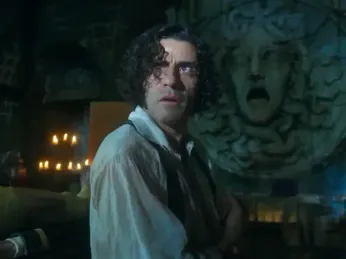
Set in the 1850s, the new film begins in the Arctic, where a ship bound for the North Pole has become trapped in the ice. Much to their surprise, the shipmates encounter a badly injured Victor Frankenstein (Oscar Isaac) and bring him aboard. Almost immediately, the ship is attacked by a being with superhuman strength (Jacob Elordi) who kills six crew members and cannot be stopped by gunfire.
“Bring him to me!” the creature cries.

Spark of life
The ship’s captain demands that Frankenstein tell him who the creature is, and Frankenstein recounts his story, explaining that he is the creature’s creator. The film then flashes back and Victor is seen explaining his theories of life and death to the teachers and students of the medical college he attends, going so far as to demonstrate his efforts at reanimating corpses. This is viewed as sacrilege and he is expelled from the school.
Undaunted, Victor continues his work, determined to create artificial life. The uncle of his brother’s fiancé gives him unlimited funds and an isolated castle in which to continue his work and Victor goes about collecting bodies and assembling his creature.
The creation scene is magnificent. As in the 1931 film, the creature is brought to life via lightning. The entire castle lights up in the night sky as a storm rages, the lightning striking a rod that Victor placed atop the castle’s tower. Electric sparks travel down to the creature’s body, bringing it to life.
But Victor has second thoughts about what he has done and attempts to burn down the castle with the creature in it. The building explodes, but the creature, who is immortal, survives.
Back at the ship, the creature tells the captain his version of the story. He recounts being taught how to speak and read by an old blind man (David Bradley) who lives on an isolated farm. The creature, desperately lonely and realizing that he cannot die, asks Frankenstein to make a companion for him. The doctor refuses and the creature flies into a rage, killing Frankenstein’s brother on his wedding night.
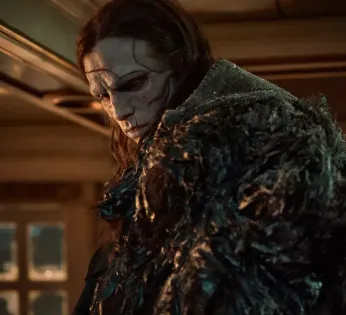
The creature and Frankenstein then engage in a game of cat and mouse, chasing each other to the ends of the earth until they end up in the arctic.
Elordi and Isaac both offer superb performances. Isaac’s Frankenstein is obsessed to the point of being manic as he goes about his ungodly experiments. Elordi almost steals the show as the tragic creature who yearns to be loved and accepted by a world that will never accept him. As with Karloff in the 1931 film, the creature’s humanity becomes the heart of the story.
The settings and costumes are lavish. Once again del Toro has created a Gothic masterpiece, a visually stunning triumph in the vein of his 2015 film “Crimson Peak.” Making “Frankenstein” had been a dream project for the auteur, and he made his dream come true with love and care.
“Frankenstein” is a tale that may have been told too many times, with dozens of films inspired by Shelley’s novel having been made. Yet del Toro has done what so many have considered impossible; he’s made this overly familiar tale seem fresh.
The film had a limited theatrical release where a lucky few were able to see it on the big screen where it belongs, where it impressive visuals could be fully appreciated. Landmark’s Opera Plaza Cinemas has been showing it these past few weeks. It will remain there at least through November 20. See it there if you can. If not, check it out on Netflix.
Landmark’s Opera Plaza Cinemas, 601 Van Ness Ave.
https://www.landmarktheatres.com